
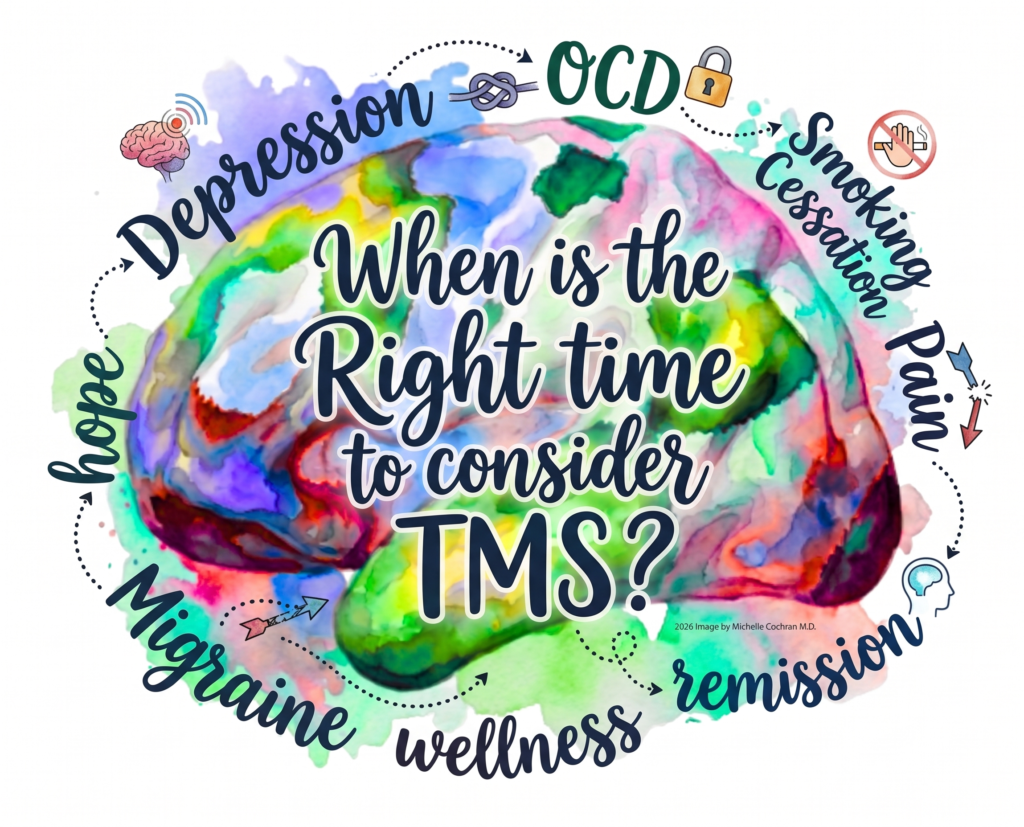
 Transcranial Magnetic Stimulation (TMS) represents a profound paradigm shift in how we treat complex, stubborn neurobiological conditions. If you are living with major depression, obsessive-compulsive disorder (OCD), chronic migraines, or find yourself unable to break the cycle of nicotine dependency during smoking cessation, the right time to consider TMS is when traditional approaches have left you feeling stuck.
Unlike medications that flood the entire systemic body with chemicals—often leading to frustrating side effects like weight gain, fatigue, or emotional blunting—TMS takes a purely localized, non-invasive approach. By utilizing targeted magnetic pulses similar in strength to an MRI machine, TMS directly stimulates and rehabilitates the specific, underactive neural circuits responsible for regulating mood, cravings, and pain perception, essentially “waking up” the brain’s natural ability to communicate effectively.
The ideal moment to transition to TMS therapy is when you decide to pivot your mental health goals from merely “managing symptoms” to actively pursuing true clinical remission. Often, standard talk therapy or a simple medication adjustments may not be enough to reshape the brain pathways responsible for these psychiatric illnesses. Because TMS is an FDA-cleared, drug-free, and completely outpatient treatment requiring no anesthesia, it seamlessly integrates into your daily life while working aggressively beneath the surface to restore long-term cognitive wellness. If you have tried two or more antidepressants without success, or if neurological conditions are actively dictating your quality of life, consulting an interventional psychiatric expert about TMS can be the definitive first step toward reclaiming hope, vitality, and lasting relief.