
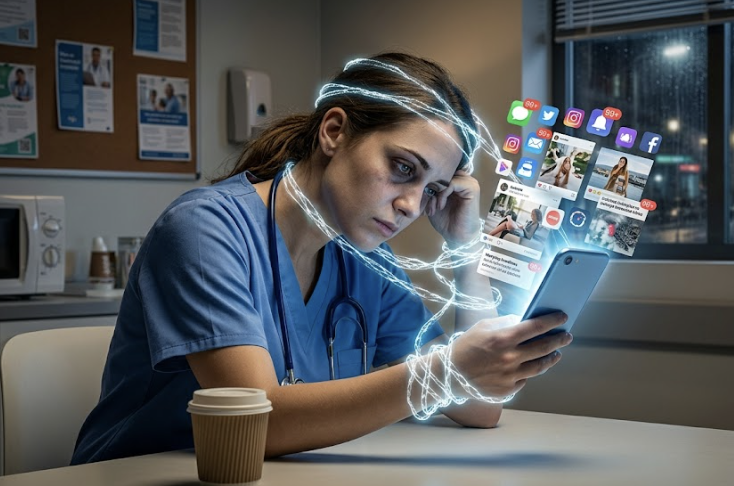
We often talk about the “healing power” of taking a break, but for many healthcare professionals, those breaks are spent staring at a screen. Whether it’s scrolling through Instagram, catching up on TikTok, or watching YouTube, digital devices have become the go-to escape from the high-pressure environment of the clinic.
However, a new study published in BMC Psychology suggests that this digital escape may be doing more harm than good. Researchers found a significant link between digital addiction and increased levels of depression, anxiety, and stress among clinicians.
Why Healthcare Workers are at Risk
The medical field is a pressure cooker. Irregular hours, night shifts, and the emotional weight of patient care create a unique kind of exhaustion. To cope, many professionals turn to their phones to “numb out” or alleviate stress during their shifts or after a long day.
This compulsive engagement with digital devices—despite negative consequences—is what experts define as digital addiction.
The Findings: By the Numbers
The study surveyed 371 health professionals (including doctors, nurses, and midwives) and found some sobering correlations:
- Average Use: Participants used digital devices for an average of 4.4 hours per day, with 65% focusing on social media.
- The Strongest Predictor: The sheer duration of device use was the most accurate way to predict whether someone was struggling with digital addiction.
- The Psychological Toll: High digital addiction scores were directly linked to more loneliness, anxiety, depression, and stress.
- The Feedback Loop: Loneliness and digital addiction together explained nearly a quarter (21% to 23%) of the variance in mental health symptoms among the participants.
A Hidden Cycle of Loneliness
One of the most striking findings was the role of loneliness. The data showed that the lonelier a professional felt, the more hours they spent on their devices. Ironically, while they were seeking connection or a distraction through their screens, the digital addiction actually correlated with higher loneliness scores.
A Call for “Digital Detox” in the Workplace
While the study shows an association rather than direct causation (meaning we can’t say for certain that the phone causes the depression), the link is too strong to ignore. The researchers emphasized that “uncontrolled digital media use” in high-stress professions creates significant psychological risks.
So, how can healthcare organizations support their staff? The study suggests moving beyond traditional support and implementing:
- Digital Detox Workshops: Helping clinicians set boundaries with their technology.
- Psychosocial Support Lines: Providing outlets for stress that don’t involve a screen.
- Intentional Breaks: Encouraging “analog” rest periods that allow the brain to actually recover from occupational stress.
The Bottom Line
If you are a healthcare clinician (doctor, nurse, clinician, therapist or similar) and find yourself reaching for your phone the second you step out of a patient’s room, you aren’t alone—but you might be fueling your own burnout. Transitioning from a high-stress environment to a high-stimulation screen doesn’t allow the mind to reset. It might be time to put down the phone and find a more restorative way to recharge.
Come see any of our licensed Clinicians at our 5 locations to learn more!: https://hopeforyourbrain.com/
Synaptic Psych – Brentwood Clinic is located at 5300 Maryland Way Ste 103, Brentwood TN 37027 – Welcome to Synaptic Psych’s Brentwood clinic, where compassionate, cutting-edge mental health care meets the heart of Williamson County. We serve Brentwood, Nolensville, Antioch, and beyond!
Synaptic Psych – Franklin Clinic is located at 381 Riverside Dr Suite 460, Franklin, TN 37064 – Welcome to Synaptic Psych’s Brentwood clinic, where compassionate, cutting-edge mental health care meets the heart of Williamson County. We serve Brentwood, Nolensville, Antioch, and beyond! Our expert team of Brentwood Psychiatrists offers a full spectrum of behavioral health services
Synaptic Psych – Nashville Clinic is located at 2125 Belcourt Ave, Nashville, TN 37212. – Welcome to Synaptic Psych’s Nashville clinic, where compassionate, cutting-edge mental health care meets the heart of Davidson County. Our expert team of Nashville Psychiatrists and Nashville Child Psychiatrists offers a full spectrum of behavioral health services
Synaptic Psych – East Nashville Clinic is located at 3800 Gallatin Pike, Nashville TN 37216 – Welcome to Synaptic Psych’s East Nashville clinic, where compassionate, cutting-edge mental health care meets the heart of Davidson County. Our expert team of East Nashville and Inglewood Psychiatrists offers a full spectrum of behavioral health services
Synaptic Psych – 871 Ridgeway Loop Road, Suite 108 Memphis TN 38120 – Welcome to Synaptic Psych’s Memphis clinic, where compassionate, cutting-edge mental health care meets the heart of Shelby County. Our expert team of Memphis and Germantown Psychiatrists and behavioral health experts offers a full spectrum of behavioral health services