
 When you are living with depression, one of the most frustrating things can be the internal debate that happens every morning: “Is this really bad enough to warrant professional help, or am I just having a bad week?”
Because depression often develops gradually rather than hitting all at once, it is incredibly easy to normalize your suffering. You might tell yourself you are just tired, stressed from work, or going through a rough patch.
But waiting until you hit “absolute rock bottom” to seek help is a myth that keeps far too many people suffering in silence. Here is a practical guide on how to recognize when it is the right time to reach out to a professional.
1. The “Two-Week” Clinical Benchmark
From a medical standpoint, clinicians look at a specific timeline when evaluating mood disorders.
The General Rule: If you have experienced a persistent, low mood or a loss of interest in activities you usually enjoy for at least two weeks straight, it meets the primary timeline criteria for clinical depression.
While everyone has bad days, a natural dip in mood usually fluctuates. Clinical depression acts more like a heavy blanket that doesn’t lift, regardless of good news or a change in your environment.
2. Your Routine Is Requiring “High Functioning” Exhaustion
A major misconception is that depressed people can’t get out of bed. In reality, millions of people live with high-functioning depression. You might still be showing up to your job, taking care of your family, and paying your bills, but the internal cost of doing so has skyrocketed.
Take an honest look at your daily energy:
- Does getting through a standard day feel like running a marathon in wet jeans?
- Are you withdrawing from friends and family because you simply don’t have the emotional bandwidth to converse?
- Do you find yourself crashing completely the moment you get home, with zero energy left for hobbies or self-care?
If maintaining your normal life requires an unsustainable amount of energy, it is time to seek support.
3. The Shift from “Sadness” to “Anhedonia”
Depression isn’t always crying or feeling overwhelmed by sadness; quite often, it is an absence of feeling altogether. Doctors call this anhedonia—the inability to feel pleasure from things that used to make you happy.
If your favorite music sounds flat, your favorite food tastes bland, and spending time with your favorite people feels like a chore, your brain’s chemical reward pathways are sending out an SOS.
4. Physical Symptoms Are Manifesting
Your brain and your body are deeply connected. Often, depression shows up physically long before we acknowledge it mentally. Pay close attention to these biological shifts:
- Sleep Disturbances: Insomnia, waking up in the middle of the night, or conversely, hypersomnia (sleeping 10+ hours a day and still feeling exhausted).
- Appetite Changes: Sudden weight loss or using food as a primary coping mechanism to induce comfort.
- Unexplained Aches: Chronic headaches, muscle tension, or stomach issues that don’t have a clear physical cause.
How Modern Care Can Help: Beyond the Standard Pill
A common reason people delay seeking treatment is the fear of being handed a cookie-cutter prescription that makes them feel numb or comes with harsh side effects.
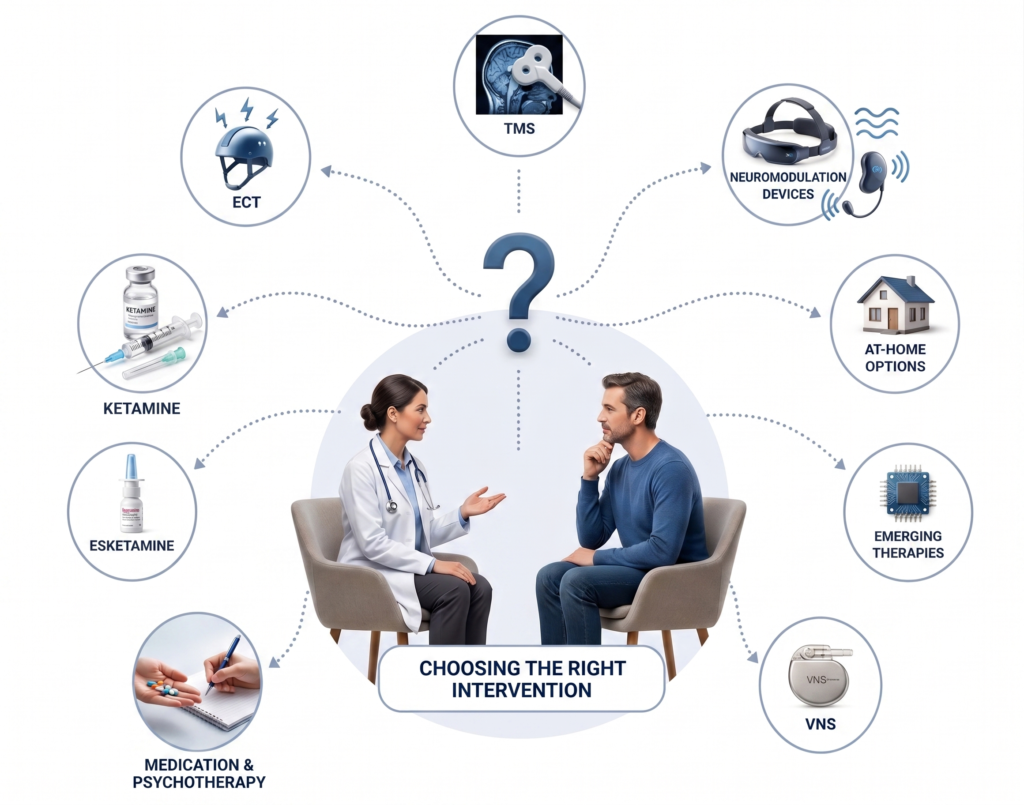
Fortunately, modern interventional psychiatry has advanced dramatically. Today, clinics like Synaptic PSYCH across Tennessee offer a personalized, comprehensive toolkit that goes far beyond traditional antidepressants. When you seek help early, you gain access to an array of cutting-edge modalities tailored to your biology:
| Treatment Modality | How It Works | Best For |
| *Targeted Psychotherapy | Structured talk therapies like CBT or Mindfulness Facilitation. | Building coping mechanisms and processing environmental stressors. |
| Advanced Medication Management | Precise, biologically informed adjustments to traditional prescriptions. | Restoring basic chemical balance with a focus on minimizing side effects. |
| *TMS (Transcranial Magnetic Stimulation) | A non-invasive, drug-free therapy using magnetic pulses to wake up underactive mood centers in the brain. | Treatment-resistant depression or those wanting to avoid medication side effects. |
| *Esketamine (Spravato®) or Ketamine | An FDA-approved, rapid-acting clinical treatment that helps rebuild depleted neural pathways; ketamine is the generic non-FDA cleared option when insurance doesn’t pay for Esketamine | Severe, stubborn depressive episodes that haven’t responded to traditional pills. |
*There are many other options for care that our experts will discuss in a consultation with you.
The Bottom Line: You Don’t Have to Wait
You do not need to wait until your life is in shambles to deserve help. The best time to seek treatment for depression is the moment you realize it is changing how you live your life. Early intervention not only makes recovery faster, but it also protects your brain health and your relationships from prolonged strain.
If you are ready to explore what a tailored roadmap to recovery looks like, reach out to a local psychiatric professional. Your brain deserves the support.