
 Navigating the Shift: Insights from The Early Career Psychiatrist Playbook at APA 2026
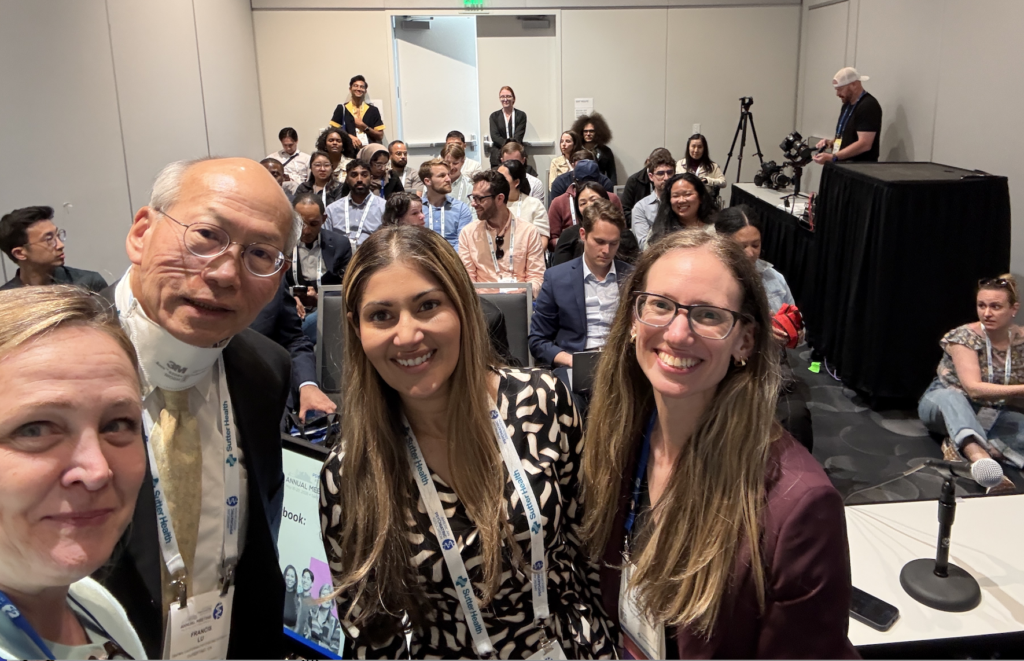
Transitioning from the highly structured environment of a residency or fellowship into independent psychiatric practice is a profound shift. To help upcoming leaders navigate this turning point, a packed room of PGY4 residents, fellows, and early-career clinicians gathered at the American Psychiatric Association (APA) Annual Meeting in San Francisco on Monday, May 18th, 2026. An expert panel delivered a highly practical workshop titled: “The Early Career Psychiatrist Playbook: From Grind to Growth.” The interactive session dismantled traditional career myths and provided attendees with a tangible roadmap for professional growth across academia, research, private practice, and employment.
Here are the key takeaways and the multidisciplinary group of speakers who made the event a resounding success:
The workshop brought together a dynamic team of distinguished educators, researchers, and clinical executives, each bringing a unique perspective to the career playbook:
Pallavi Joshi, D.O., M.A., FAPA
Karen M. Dionesotes, M.D., M.P.H.
Francis Lu, M.D., DLFAPA
Michelle Cochran, M.D., DLFAPA, FCTMSS
Dr. Pallavi Joshi kicked off the academic portion of the playbook by mapping out how a trainee transitions into an independent investigator. She outlined the four core research pathways available to modern psychiatrists:
Academic Physician-Scientist: Balancing protected research time with clinical duties, heavily supported by grant funding (such as the NIH $K\rightarrow R$ grant pipeline).
Clinician-Researcher (Hybrid): Remaining primarily clinical while actively contributing to Phase 3 clinical trials, state grants, or quality improvement (QI) initiatives.
Industry, Pharma, & Digital Health: Venturing into translational science, clinical trials, and innovation roles within biotech startups or AI-driven mental health tech companies.
Public Sector and Policy: Focusing on implementation science and population health through major organizations like the NIH, VA, WHO, or healthcare foundations.
Dr. Joshi emphasized that the keys to early research success lie in securing dedicated mentorship, negotiating protected time in initial employment contracts, and maintaining persistence through the inevitable cycles of grant rejections.
Focusing on the educational pillar, Dr. Karen M. Dionesotes addressed a common early-career dilemma: How do you grow into educational leadership without a pre-existing roadmap?
Dr. Dionesotes encouraged attendees to understand that education leadership is an active, evolving journey where “mentorship is the curriculum”. She provided actionable steps for building an identity as an educator:
Volunteer to teach: Claiming a single lecture slot is often the catalyst for being invited back.
Own a curricular niche: Specializing in a unique topic allows your clinical expertise to compound over time.
Be intentional: Mentor at least one individual deeply, recognizing that great mentorship is entirely reciprocal.
Advocate for yourself: Big educational roles are frequently looking for someone to step up—do not be afraid to ask for the title and the dedicated time.
Document everything: Keep a meticulous running list of hours taught, learner evaluations, and the size of your audiences to build a strong institutional portfolio.
Navigating the job market “zoo” can be overwhelming for those exiting residency. Doctors. Francis Lu M.D., and Michelle Cochran M.D. teamed up to present a practical guide to decoding job offers and identifying professional red flags.
Drs. Lu and Cochran urged early-career psychiatrists to look past simple base salaries and carefully calculate Total Compensation using a comprehensive formula:
$$\text{Total Compensation} = \text{Base Salary} + \text{Production/RVU Bonuses} + \text{Sign-on/Relocation Benefits}$$
They highlighted critical variables to consider across hypothetical job structures:
Hidden Costs: Always determine who pays for tail malpractice insurance coverage and who is responsible for managing prior authorizations or patient scheduling.
The “Non-Negotiables”: Contract essentials must explicitly define call requirements (demanding specific ratios rather than vague text) and evaluate any potential restrictive covenants (non-competes). Drs. Lu and Cochran strongly advised investing in a qualified healthcare attorney to review any contract before signing.
The Post-Residency “Poverty” Trap: The speakers warned against large immediate purchases (like a new car) right out of training. State licensing and insurance credentialing can frequently take 120 to 180 days, meaning a newly hired doctor might face a 6-month gap before generating active clinical revenue. Utilizing salary draws or structuring sign-on bonuses can help bridge this operational gap.
Whether choosing the path of private practice, inpatient hospital care, telepsychiatry, or subspecializing via fellowships, the workshop emphasized that clinical skills are an assumed commodity. True career growth relies on mastering the business, contractual, and academic frameworks that dictate modern medicine.
By building strong peer networks, seeking structured mentorship, and protecting professional boundaries, the next generation of psychiatrists is well-positioned to move smoothly from the grind of training into thriving, long-term careers.