
 The landscape of psychiatric medicine is shifting beneath our feet. For decades, the standard toolkit for a practicing psychiatrist revolved tightly around traditional talk therapy and standard medication management. But as clinical science and technology advance, a new paradigm has emerged—one that empowers clinicians to move beyond the prescription pad.
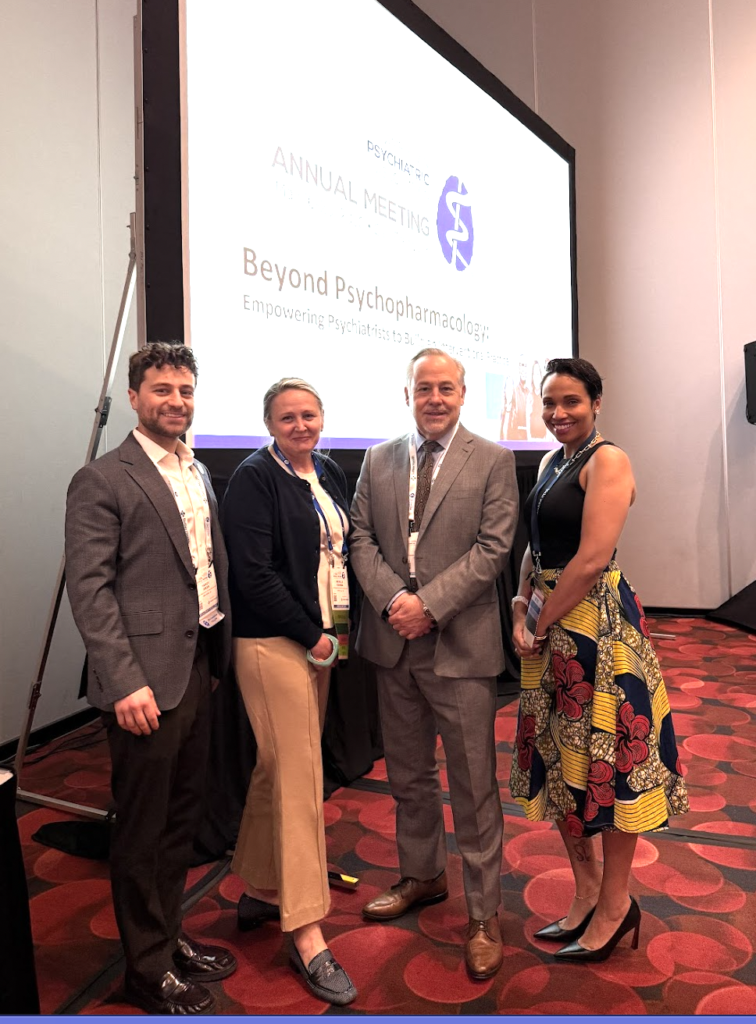
On Sunday, May 17, 2026, packed into the Moscone Center in San Francisco, California, hundreds of residents, fellows, and established clinicians gathered at the American Psychiatric Association (APA) Annual Meeting for an essential lecture: “Beyond Psychopharmacology: Empowering Psychiatrists to Build an Interventional Practice.” Divided into four core pillars, the talk offered a comprehensive blueprint for launching, operating, and scaling a modern interventional psychiatry practice, with a heavy emphasis on making these life-saving technologies accessible, inclusive, and equitable.
Yaakov Green M.D. opened the lecture with a compelling narrative tracing the evolution of psychiatry into advanced, technology-driven treatments. He defined Neuromodulation and talked about future-proofing a practice through the lens of equity and inclusion. Dr Green framed an immense opportunity for the next generation of psychiatrists and career-pivoting clinicians to improve patient outcomes, particularly for populations disproportionately affected by severe, treatment-resistant mental illness. Presenter, Lisa Harding, M.D. dove into the clinical evidence-based practices and strict treatment guidelines dictating the industry. Harding rapidly navigated through the core modalities, dedicating a focused analysis to each: ECT, TMS, Esketamine, Ketamine, VNS, Prism for PTSD, tDCS, and Trigeminal ADHD Device & eCOT-AS devices. Presenter, Michelle Cochran, M.D. took the stage to map out the economic and operational architecture of an interventional practice. Dr. Cochran outlined the tangible framework for calculating startup costs (specialized medical equipment, physical clinic space, electronic health record software) and mapping out a clear runway to profitability. Crucially, she highlighted strategies for navigating reimbursement hurdles for underinsured and Medicaid populations. Clinicians were urged to explore unique grant opportunities, philanthropic funding, and state-level mental health initiatives to offset the costs of treating vulnerable demographics. An interventional practice lives and dies by its core team: TMS technicians, administrative support, and specialized billing experts. Finally, Todd Hutton, M.D. reviewed the Operational Engine of an Interventional practice. He closed out the core training by breaking down the practical mechanics required to keep a specialized clinic running efficiently without sacrificing the patient experience. Hutton laid out the ideal digital footprint, emphasizing a strong website, cohesive social media presence, and a robust professional referral network built on transparent clinical outcomes. Hutton reviewed the exact utilization of CPT codes to maximize reimbursement and offered definitive strategies to minimize claim denials. Clinicians were instructed on how to fiercely advocate for patients facing disproportionate insurance denials that may stem from systemic racial or socioeconomic bias, concluding with a powerful call to align with current federal and state mental health parity advocacy efforts to mandate equitable coverage for interventional procedures. The lecture wrapped up the lecture with a poignant, forward-looking message. To build a truly resilient, modern practice, the next generation of psychiatrists must seamlessly marry uncompromising clinical excellence with astute business acumen. As an effective lecture does, the presenters ended with a Question and Answer session that went long past their scheduled time. It was said, repeatedley, that gy stepping beyond psychopharmacology, psychiatrists aren’t just adopting new technology—they are opening doors to life-changing healthcare for patients who need it most.